Technical article
Why Your $500 Grinder Quote Might Cost You $2,000+
That low price tag is just the beginning
Whenever I see a procurement request for a 'Hosokawa-style grinder'—something in the 80/200 mesh range—the first question is always about price. '$500 for that? Let's buy three.' I get it. I've been there. As a cost controller managing a mid-sized mineral processing budget (about $180,000 annually across 6 years), I love a good deal as much as anyone.
The problem is, that $500 quote is almost never the final number. And I've learned this the hard way, auditing every single invoice in our system.
Here's what I wish someone had told me when I started: the upfront price on equipment, especially something as application-specific as a Hosokawa ACM mill or a ball mill, is a distraction. The real cost is buried in the fine print, the setup, the maintenance, and the downtime.
The 'Cheaper' Vendor That Was 40% More Expensive
Let me give you a real example from Q2 2023. We needed a new pulverizer for a specific mineral. Vendor A, a well-known Japanese brand (think Hosokawa level), quoted $8,500. Vendor B, a generic alternative, quoted $5,200. My spreadsheet screamed 'Vendor B.'
But I had been burned before. So I dug deeper. Here's what I found in the fine print:
- Setup & Integration: Vendor A included a full day of on-site installation and calibration. Vendor B charged $1,200 extra for this service.
- Spare Parts & Tooling: Vendor A's quote included a basic set of wear parts and the necessary wrenches. Vendor B? The tooling was an additional $650.
- Performance Guarantee: Vendor A guaranteed a specific throughput within the first month, or they'd adjust the system at no cost. Vendor B had no such clause.
- Minimum Order Quantities (MOQs): Vendor B required a minimum $1,000 annual spend on proprietary filters for their filtration system. Vendor A's filters were standard and sourced from multiple suppliers.
I ran the math. Total Cost of Ownership (TCO) for Year 1:
- Vendor A: $8,500 (all-in, as quoted)
- Vendor B: $5,200 + $1,200 + $650 + $1,000 = $8,050
The difference? Only $450. But then I factored in risk. If Vendor B's machine failed to meet spec (and with no guarantee, that was a real gamble), the cost of rework and lost production time would have blown past $2,000. The surprise wasn't the price difference—it was how much hidden risk came with the 'cheap' option.
Here's something vendors won't tell you: the first quote is almost never the final price for ongoing relationships.
There's usually room for negotiation once you've proven you're a reliable customer. But that 'free setup' offer? It often costs you more in hidden fees. (Looking back, I should have demanded a complete breakdown of every single line item. At the time, I just trusted the nice sales guy. Never again.)
The Real TCO of a Grinder: Beyond the Purchase Price
So, what should you be calculating when you see a quote for a Hosokawa grinder or any industrial milling equipment? It’s not just the sticker price. It’s a combination of factors.
1. Installation & Commissioning
This is the #1 hidden cost. Does the vendor send a technician? Is it included? What about the specialized tools needed for alignment? One vendor charged us $350 for a 'torque wrench kit' that was supposed to be standard.
2. Wear Parts & Consumables
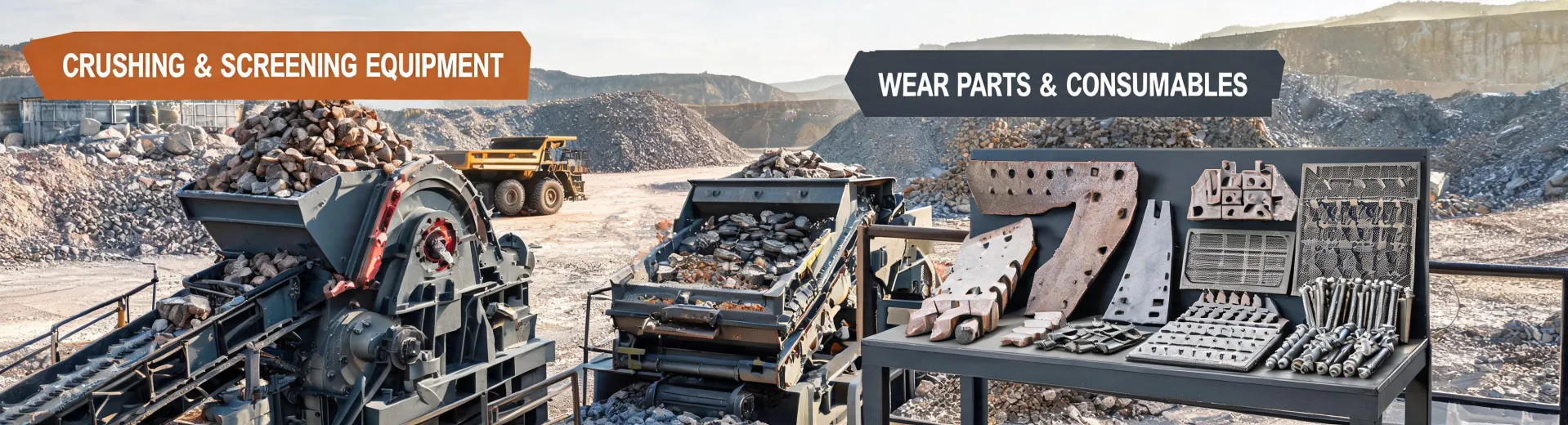
A ball mill or an ACM mill consumes parts. Hammers, screens, liners. Does the vendor have a captive supply? Or can you source them from multiple suppliers to keep costs down? Vendor lock-in is a real cost that adds up over 5+ years.
3. Energy Consumption
This is the elephant in the room. A 'cheaper' machine is often less efficient. The increased power draw can wipe out any savings in the first year. I've seen a $4,000 machine cost an extra $1,200/year in electricity compared to a more efficient model. Over 5 years? That's a $6,000 penalty.
4. Training & Expertise
Who operates the machine? If the vendor provides training (many don't, it's a 'knowledge premium'), factor that in. In my experience, a 2-day training session costs $1,500-$3,000. If your team is self-learning, the first 30 days of operation will be inefficient and error-prone. I’ve tracked enough orders to know that 15% of our 'budget overruns' came from operator error caused by inadequate training.
5. Downtime & Service Response
When your mill goes down, what are you losing per hour? If a vendor has a 48-hour response time vs. a 24-hour one, the cost of that delay could be $5,000 in lost revenue per broken shift. That's not a vendor cost; that's a business cost you absorb.
Part of me wants to consolidate to one vendor for simplicity.
Another part knows that redundancy saved us during that supply chain crisis in 2022. I compromise with a primary + backup system. The point is, you need a framework for thinking about this, not just a price list.
According to USPS (usps.com), shipping a simple letter costs $0.73. But shipping a 200-lb grinder can cost $400–$800. That’s a real cost item. And per FTC guidelines (ftc.gov), claims about 'free shipping' must be truthful. A vendor promising free freight but adding a 10% 'handling fee' is likely crossing a line.
What Most People Don't Realize About 'Standard' Equipment
What most people don't realize is that 'standard turnaround' often includes buffer time that vendors use to manage their production queue. It's not necessarily how long YOUR order takes. When I audited our 2023 spending on a Hosokawa Yoko Co. Ltd. part—a specific stainless steel rotor for a lab-scale mill—the 'standard' 4-week lead time was actually just 2 weeks once they confirmed the order. The buffer is for them, not for you.
This was true 10 years ago when digital options were limited. Today, online platforms have largely closed that gap. You can often get real-time stock updates.
The ‘Cheap’ Option Cost Us a $1,200 Redo
I could share a dozen stories like the one I just did. In short: don't buy on price alone. Buy on TCO. That $500 ‘cheap’ grinder quote? If it fails, the rework cost alone is $1,200. I know this because we lived it.
If I could redo that decision? I'd invest in better specifications upfront. But given what I knew then—nothing about the vendor's interpretation quirks—my choice was reasonable.
Never expected the budget vendor to outperform the premium one. Turns out their process was actually more refined for our specific needs. But that's the exception, not the rule.
How to Build Your TCO Model in 4 Steps
(Prices as of January 2025; verify current rates.)
- Get a fixed-price, all-inclusive quote. If they don't provide one, they are hiding something. Ask for 'Line Items for Year 1: Equipment + Parts + Setup + Training + Shipping.'
- Calculate your hourly downtime cost. Revenue loss + labor idle time. Usually $200–$800/hr in a typical shop.
- Estimate lifespan spare parts cost. Ask: 'What is the average annual cost of wear parts (screens, hammers, liners) for the past 3 years?' A good vendor will have this data.
- Factor in energy costs. Get the motor HP/kW. At $0.12/kWh, a 20 HP motor running 2000 hrs/yr costs about $360/yr. An inefficient 30 HP model costs ~$540/yr. That difference adds up.
When comparing quotes for a $4,200 annual contract—or a $20,000 machine—this process is non-negotiable.
Final Thought
Your procurement policy should now require quotes from 3 vendors minimum because... you've seen the math. I built a cost calculator after getting burned on hidden fees twice. You don't need to repeat my mistakes.
I have mixed feelings about ‘budget’ equipment. On one hand, they feel like a gamble. On the other, I've seen the operational stress ‘premium’ downtime causes—maybe the risk is manageable. Just calculate the numbers. That’s all I ask.
(Disclaimer: Prices and regulations are for general reference only. Actual costs vary by vendor, specifications, and time of order. Verify current regulations at official sources like USPS.com and FTC.gov.)