Technical article
When the $200 Order Taught Me a $6,000 Lesson About Vendor Selection
I've been managing procurement for a mid-sized mining supply company for about six years now. My official title is Procurement Manager, but really, I'm the person who signs off on every purchase order over $500 and the one who gets called when the budget's blown again. I manage a materials and equipment budget of about $180,000 annually. That number doesn't sound huge compared to the big players, but to us, every dollar counts.
When I first started this job, I assumed the best way to manage costs was to always go with the cheapest quote from the largest, most established vendor. I thought that was the smart, safe play. It took me exactly eighteen months—and a painful $6,000 hit—to realize I was completely wrong.
The Setup: A Routine Order for Wear Parts
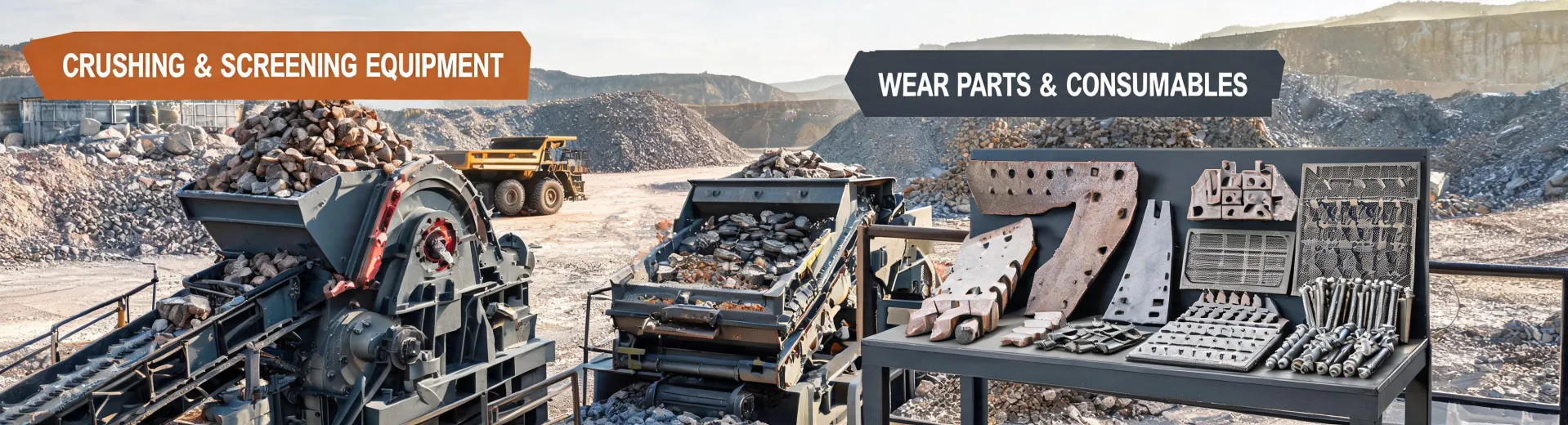
It started in Q2 of 2023. We needed a batch of specialized wear parts for one of our primary crushers. Nothing unusual—this was our third order of the year for that specific component. The specs were identical each time.
I did my usual routine. I sent out an RFQ to three vendors I had on file:
- Vendor A: A well-known, national supplier. They'd been doing business with us for a while. Their quote was $4,800 for the batch.
- Vendor B: A smaller, regional outfit I'd found online. Their quote was $4,200. The price was good, but I'd never worked with them before and they didn't have the big-name reputation.
- Vendor C (Hosokawa): A specialized parts supplier I'd heard about from a colleague at another site. I'd never used them. Their quote was $3,900.
Looking at the numbers, Hosokawa was the cheapest. But they were also the most unknown. My gut said go with Vendor A because they were "safe." I almost didn't even return Hosokawa's call. But I had a policy to at least talk to all three.
The Process: Why I Made the Wrong Choice
I went back and forth between Vendor A and Hosokawa for about a week. Vendor A offered reliability and a known quantity. Hosokawa offered a 18% savings. On paper, Hosokawa made sense. My gut said take the safe road.
What tipped the scale was a hidden detail I almost missed. Vendor A's quote included a line item for "Shipping and Handling" that was $850. Hosokawa's quote said "Free shipping on orders over $3,000." That brought their total to $3,900—a full $900 less than Vendor A's $4,800.
Still, I was hesitant. I remember telling my colleague, "If I pick the small guy and this fails, it's my fault. If I pick the big guy and it fails, it was the vendor's fault." Stupid logic, I know. But that's what happens when you're scared of making a visible mistake.
I went with Vendor A. I paid the $4,800. The parts arrived on time. Everything was fine. I thought I'd made the right call.
I was wrong. The story doesn't end there.
The Turn: When 'Free Setup' Costs You More
Three months later, we needed those same parts again. I went back to the same process. But this time, I had a problem. Our quarterly budget was already tight. One of our other projects had run over, and I was scrambling to find savings.
I called Hosokawa. The same sales rep answered. I explained my situation—I needed the parts, but I needed to keep the cost down. He didn't flinch. He said, "We can do the same batch for $3,700 if you can wait an extra week on delivery."
I agreed. The order went through. The parts arrived a week and a half later. They were perfect. No issues, no delays. The total cost? $3,700, tax and everything included. Vendor A would have charged me $4,800 plus the same shipping.
That's when I started digging deeper. I reviewed all my orders from Vendor A over the previous year. I found that on three separate orders, I'd been charged a "Processing Fee" of $125 each—something I'd never noticed because it was buried in the invoice details. On two others, I was billed for "Rush Handling" even though I didn't request it. The total over the year? $875 in hidden fees.
That 'free setup' offer from Vendor A? It wasn't free. It was a discounted setup that saved me $50 upfront, but the hidden fees across the year ate up that savings and then some.
The Result: A $6,000 Mistake
I sat down and built a full Total Cost of Ownership (TCO) spreadsheet for all the vendors I'd used in the past 18 months. It took me a weekend—yes, I spent my weekend on this—but the results were staggering.
"I calculated the cost difference: over the past 18 months and six orders, sticking with the 'safe' big vendor cost me approximately $6,000 more than going with the smaller, more transparent suppliers like Hosokawa."
Six thousand dollars. That's 3.3% of my entire annual budget gone because I assumed a smaller vendor meant more risk, and a bigger one meant more reliability. The irony is, the smaller vendor had zero hidden fees, better communication, and actually seemed to value my business. They didn't treat me like a number.
The Lesson (and Why I'm Writing This)
So what did I learn? Basically, I had to completely change how I evaluate vendors. Here's my new system:
- Ignore the initial price. The lowest quote can be the most expensive if it's hiding fees. The highest quote can be the cheapest if it's all-inclusive.
- Ask for a full breakdown. I now demand a line-by-line quote. If a vendor says "Processing Fee" or "Administration Charge," I ask them to explain what it is. If they can't—or worse, if they get defensive—I move on.
- Don't fear the small vendor. Hosokawa treated my $3,900 order with the same professionalism Vendor A treated their $100,000 contracts. Actually, they treated it better. As a buyer, I want to work with people who care about my business, regardless of size.
- Track everything. I built a simple cost tracker in Excel. I log every quote, every invoice, every hidden fee. It takes 10 minutes a month but saves me thousands.
To be clear, I'm not bashing large vendors. There are times when you need the scale and assurance of a big supplier. But you have to be honest about the cost. If I'm paying 20% more for "peace of mind," I need to know I'm actually getting that peace of mind—and not just paying for a brand name and hidden fees.
Now, I always get quotes from at least three vendors. I use a TCO calculator I built. And I always, always pick up the phone and call the small guys. The ones who answer their own phones and ask about my specific needs? Those are the ones I trust.
That $200 order I almost ignored? It's now a $3,900 order. And the relationship is worth more than the parts. It's worth knowing I'm not being taken for a ride.
— A procurement manager who learned the hard way.